.jpg)
.jpg)
Energy markets are showing a surprisingly muted response despite renewed geopolitical tensions in the Middle East.
Recent reports suggest that Iran has again moved to close the Strait of Hormuz, alongside US action to seize an Iranian-flagged vessel suspected of breaching sanctions.
However, prices have not reacted as strongly as might be expected.
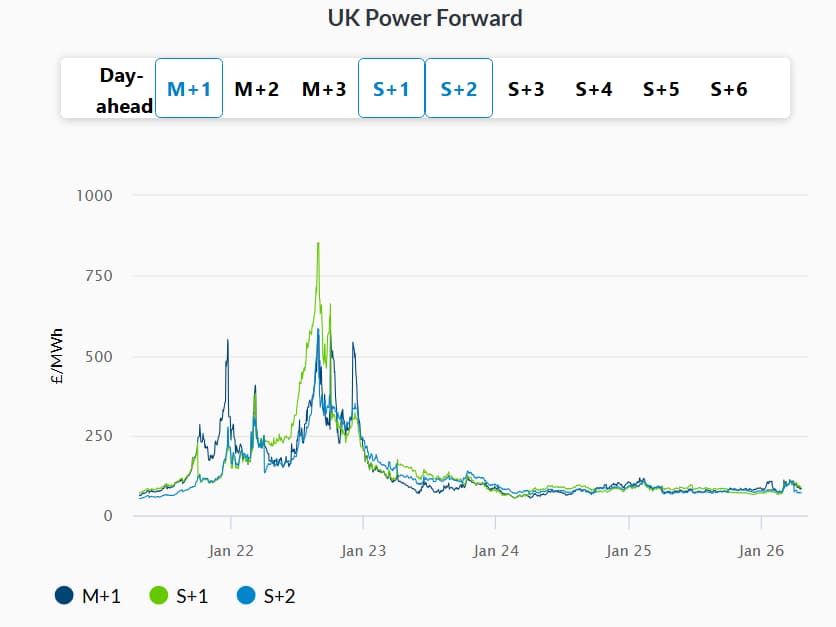
Under normal circumstances, developments involving the Strait of Hormuz would trigger significant price increases due to its importance in global energy supply.
However, current market behaviour suggests a more measured response.
The main reason for this appears to be ongoing expectations of further diplomatic talks between the United States and Iran.
Even though these discussions remain uncertain, the possibility of negotiation has helped offset some of the upward pressure on prices.
The Strait of Hormuz remains one of the most critical energy transit routes globally.
Recent developments include:
Despite this, markets are not yet pricing in a worst case scenario, suggesting that traders are waiting for clearer direction.
The current environment reflects a market that is balancing risk against potential resolution.
This has resulted in a more cautious market response, with traders holding back from making aggressive pricing moves until there is more certainty.
.jpg)
For UK businesses and care providers, this means the market is currently being driven by expectation rather than immediate disruption.
This creates:
Short term pricing stability
Reduced volatility compared to previous weeks
Ongoing uncertainty beneath the surface
While prices may appear relatively steady, underlying risks have not disappeared.
Is the market stable?
In the short term, yes, but this could change quickly.
What could cause prices to rise?
A breakdown in talks or confirmed disruption to supply routes.
What is the best approach?
Continue monitoring closely and be prepared to act if market sentiment shifts.
Energy markets are currently holding steady despite developments that would typically drive significant volatility.
The expectation of further negotiations between the US and Iran is helping to keep prices in check, at least for now.
However, with tensions still present and uncertainty ongoing, the situation remains finely balanced.
For businesses and care providers, staying informed and ready to respond remains essential.