.jpg)
Workforce instability has become one of the most significant operational risks facing the UK care sector.
While recruitment challenges have existed for many years, the issue has evolved far beyond simply filling vacancies. Today, workforce instability affects care quality, regulatory compliance, financial performance, risk management and long term business sustainability.
For many providers, staff turnover, recruitment pressures and leadership fatigue are creating challenges that extend well beyond Human Resources.
The question is no longer whether workforce instability is a problem.
The question is how organisations can manage the risks it creates.
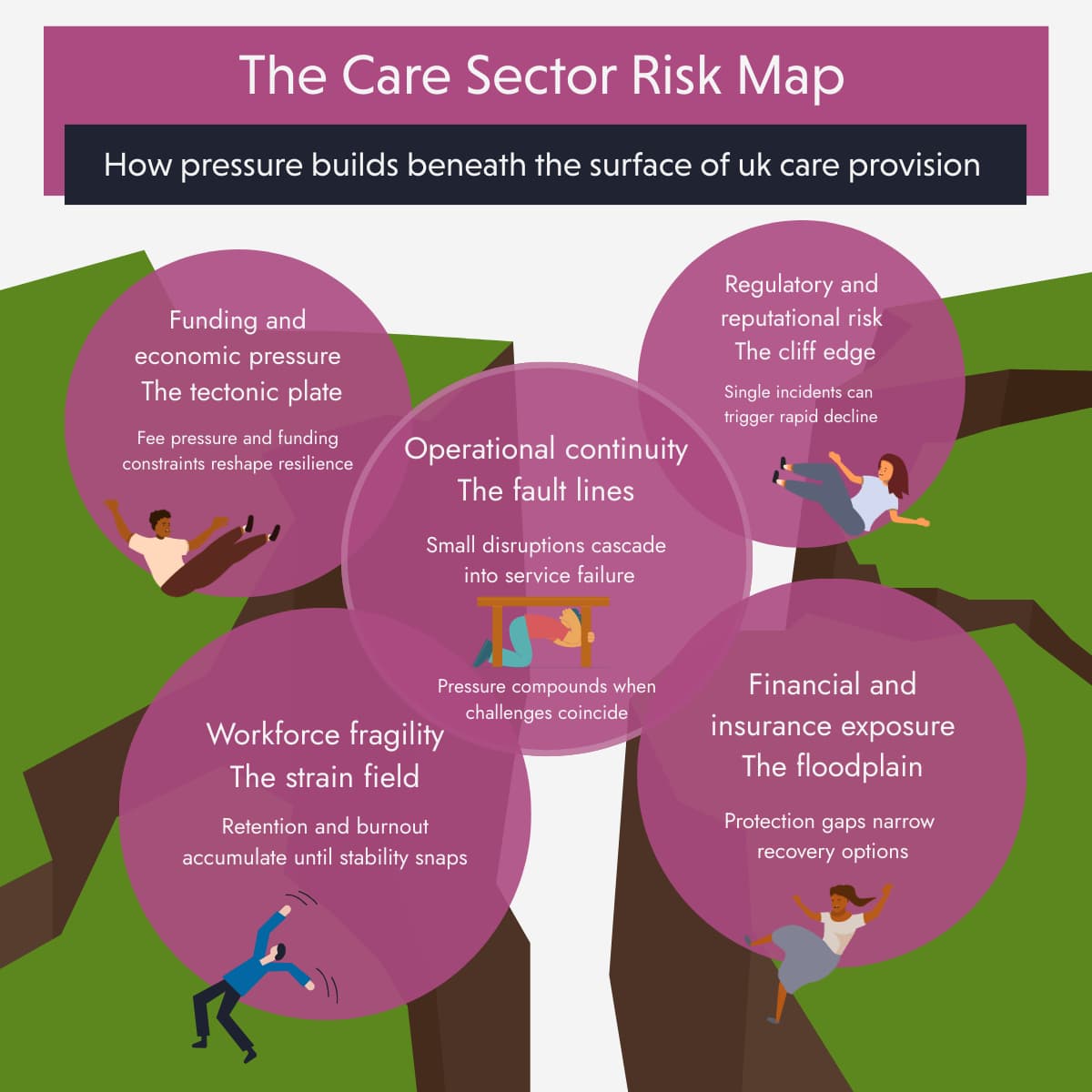
Workforce instability refers to ongoing difficulties in recruiting, retaining and supporting employees.
In the care sector, this can include:
High staff turnover
Persistent vacancies
Agency staff dependency
Increased sickness absence
Leadership burnout
Recruitment challenges
Inconsistent onboarding and training
When these issues occur together, they can create operational pressures across an entire organisation.
According to Skills for Care, the adult social care sector experiences more than 330,000 staff departures each year.
Turnover rates remain above 23%, meaning almost one in four care workers leave their role annually.
To put that into perspective, few sectors could operate effectively if a quarter of their workforce changed every year.
Yet in social care, this level of workforce churn has become normalised.
The challenge for providers is that high turnover creates risks which extend far beyond recruitment costs.
Many organisations still view workforce issues as primarily an HR concern.
In reality, workforce instability affects every area of a care business.
It can impact:
Care quality
Occupancy levels
Safeguarding outcomes
Regulatory compliance
Leadership effectiveness
Financial performance
Insurance risk exposure
Business continuity
As staffing pressures increase, leadership teams often spend more time dealing with immediate operational issues and less time focusing on strategic planning.
This can place organisations into a reactive cycle where risks become harder to identify and manage.
The financial impact of turnover is often underestimated.
High turnover can lead to:
Increased recruitment costs
Greater agency expenditure
Additional training costs
Reduced continuity of care
Lower team morale
Increased management workload
Higher complaint volumes
Potential safeguarding concerns
Over time, these costs can significantly affect both profitability and operational resilience.
The greatest risk is not always losing staff.
It is losing experienced staff.
When experienced care professionals leave, organisations lose:
Practical knowledge
Resident relationships
Safeguarding awareness
Local expertise
Team stability
Operational confidence
These qualities cannot be replaced immediately through recruitment alone.
A vacant shift can be covered.
Years of experience cannot.

Consistency plays a critical role in delivering safe and effective care.
Frequent staff turnover can create challenges around:
Training compliance
Medication management
Record keeping
Care planning consistency
Safeguarding procedures
Regulatory readiness
This is one reason why workforce stability is increasingly linked to overall organisational resilience.
The strongest providers over the next five years are unlikely to be those that recruit the fastest.
They are more likely to be organisations that:
Retain staff effectively
Support managers consistently
Improve onboarding processes
Reduce operational friction
Invest in workforce wellbeing
Identify emerging risks early
Create a positive workplace culture
Workforce stability is becoming a key business protection strategy.
Not simply a recruitment metric.
Care providers are operating in an increasingly challenging environment.
Rising costs, regulatory pressures and workforce shortages mean organisations must think beyond day to day recruitment.
Building a stable, engaged and supported workforce helps strengthen:
Care quality
Financial performance
Compliance outcomes
Leadership effectiveness
Business resilience
For many organisations, workforce stability may become one of the most important competitive advantages of the next decade.
At Quality Care Group, we work closely with care providers to identify and manage operational risks before they become critical issues.
We support organisations across:
Workforce pressure
Recruitment challenges
Compliance exposure
Insurance risk
Leadership resilience
Business continuity
Operational sustainability
Because the strongest care businesses are not simply the ones that respond to problems fastest.
They are the ones that build resilience before pressure becomes a crisis.
What is workforce instability in social care?
Workforce instability refers to ongoing difficulties with recruitment, retention, staffing consistency and employee wellbeing.
Why is staff turnover a risk for care providers?
High turnover can affect care quality, compliance, safeguarding, occupancy and profitability.
How does workforce instability affect CQC outcomes?
Frequent staffing changes can impact training, consistency, record keeping and the delivery of person centred care.
What can care providers do to improve workforce stability?
Focus on retention, leadership support, onboarding, employee wellbeing and workforce planning.
Future risks we will explore include:
Agency Dependency Risk
Occupancy Vulnerability
Leadership Burnout
Compliance Fatigue
Claims and Insurance Exposure
Financial Pressure Mapping
Reputation and Reputation Recovery Risk
If you would like to discuss workforce challenges, operational resilience or wider risks affecting your care business, start the conversation with our team today.
.jpg)