When we talk about workforce pressures in social care, we often hear the same themes: Recruitment. Retention. Vacancies. Pay pressures. Staffing levels.
All of these are important, but there is another issue that many providers are increasingly having to manage: agency dependency. Agency workers have always played an important role in care; they provide flexibility, help services respond to unexpected challenges, and often step in when providers need support quickly.
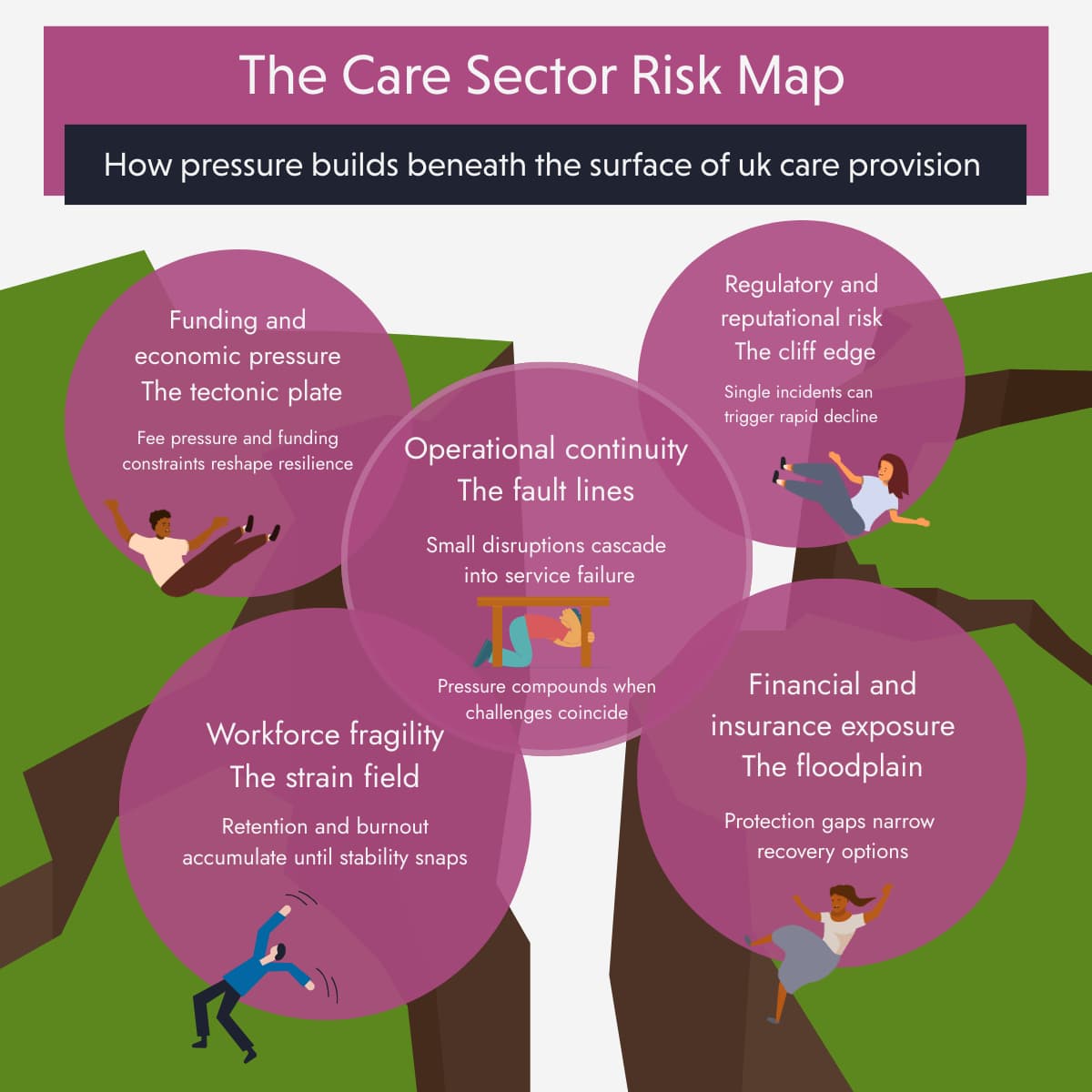
The risk is not using agency staff. The risk is when temporary solutions become a permanent part of the operating model.
Across the sector, leaders are trying to balance competing pressures every day:
For some providers, agency staffing has become the mechanism that keeps services moving. But there is a question worth asking: Are we using agency support as a short-term solution, or have we become reliant on it?
Agency spend is often viewed purely through a financial lens. However, the impact reaches much further.
High levels of agency dependency can affect:
Care is built on relationships. Familiar faces matter. Consistency matters. Trust matters. When staffing patterns constantly change, it can become harder to maintain the culture and connection that good care depends on.
A service may appear stable because every shift is covered, but underneath, there may be hidden vulnerabilities. Are permanent teams becoming exhausted from carrying additional pressure? Are managers spending more time solving staffing gaps than leading their services? Is the organisation building a sustainable workforce, or simply keeping pace with the next rota?
These are not easy questions, but they are important ones.
The strongest care businesses are looking beyond filling vacancies. They are focusing on:
Because a resilient workforce is not created by recruitment alone; it is created by an environment where people feel valued, supported and want to stay.
If agency availability reduced significantly over the next six months, how confident would you be that your organisation could continue to operate effectively?
The answer may reveal where your biggest workforce risks sit.
At Quality Care Group, we work with care providers to understand and reduce operational risks that can impact long-term sustainability, including workforce pressures, business continuity challenges and organisational resilience. Good risk management is not about waiting for problems to appear, it is about identifying vulnerabilities early and strengthening the organisation before pressure turns into disruption.
If you would like to discuss the risks currently affecting your organisation, contact us now.
.jpg)
Other articles in the Care Sector Risk Map series:
Risk #1, Workforce Instability - Why Is Workforce Instability One of the Biggest Risks Facing Care Providers?
Risk #2, Leadership Burnout - Why Is Leadership Burnout Becoming a Business Continuity Risk in Social Care?